Polarization Testing and Analysis
Luna’s broad portfolio of advanced polarization testing and polarization measurement products can accurately measure and analyze all essential polarization related properties in optical materials, components and networks.
Optical components and systems can be sensitive to the state of polarization (SOP). For example an optical signal may be attenuated differently depending on its SOP. This is known as polarization dependent loss (PDL). A birefringent optical element will have different refractive indices for different polarizations, causing the light to travel at slightly different speeds, resulting in differential group delay (DGD). In a fiber, with varying birefringent sections along its length, this effect is known as polarization-mode dispersion (PMD).
State of Polarization and Poincare Sphere Representation
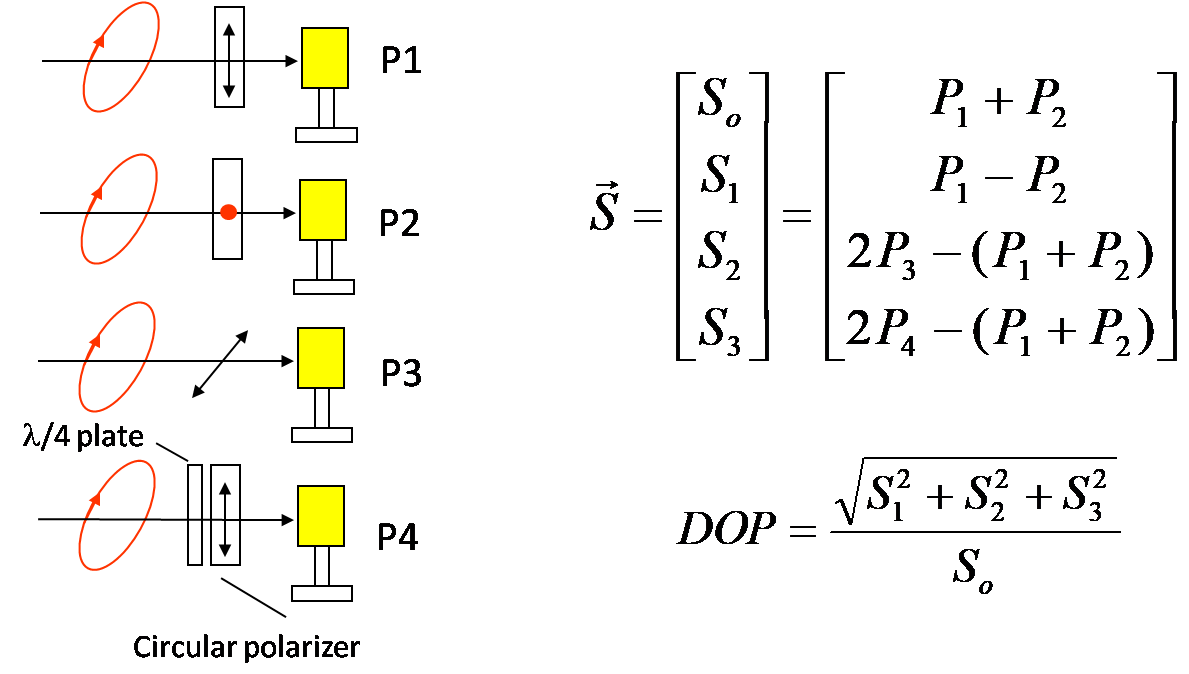
The state of polarization of light is an important parameter of optical signals because it affects how the optical beam behaves when interacting with an optical medium or an optical element. Luna’s in-line polarimeter splits the passing light into four different beams without interrupting the optical signal as shown below:
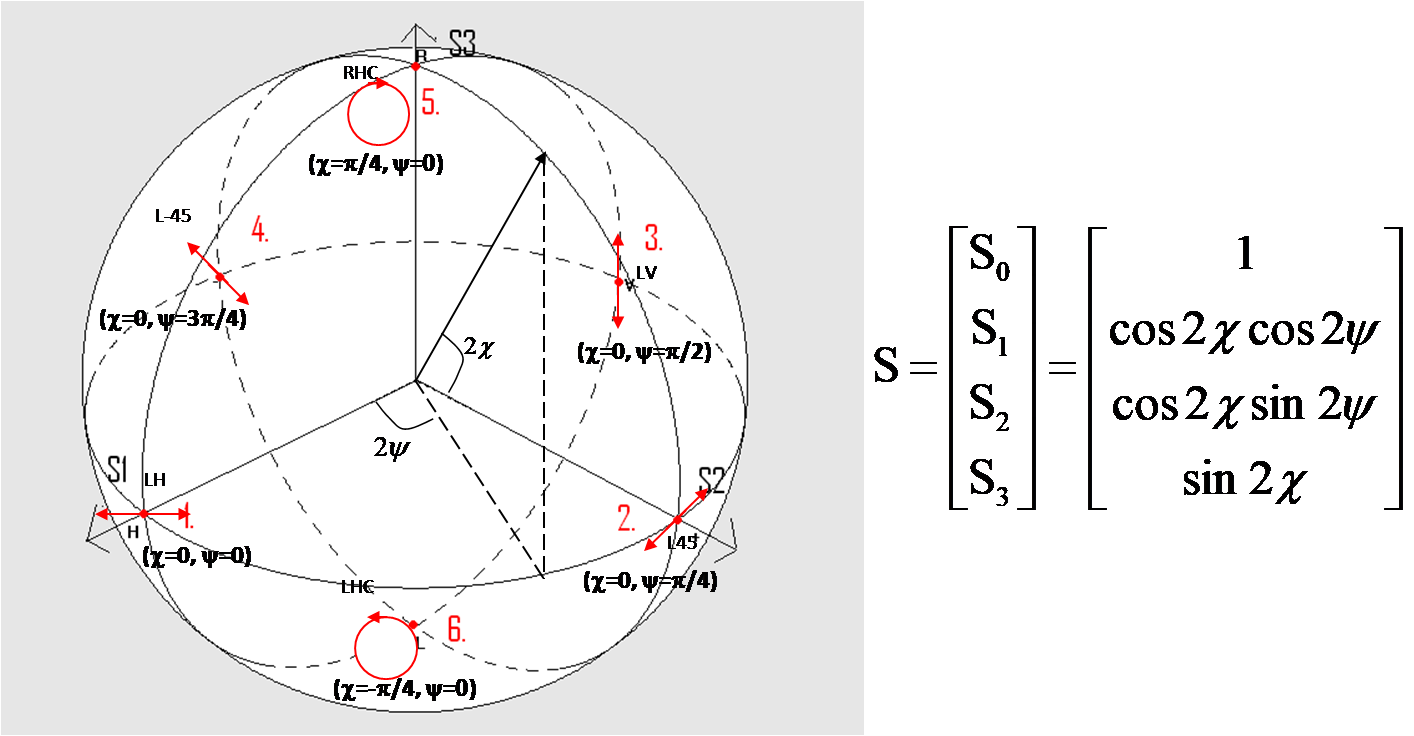
Any SOP can be represented as a point on a sphere. This 3D representation of the state of polarization is referred to as Poincare Sphere representation. Luna’s polarimeter can display the real-time changes in polarization using PolaView as shown below:
Polarization Effects in Optical Materials Components and Networks
In fiber optic communication systems, the presence of PDL and PMD from the fiber and optical components are sources of optical signal degradation that could result in incorrect data detection at the receiver. Therefore, wavelength-dependent measurements and characterization of polarization-related parameters are required for all the optics starting from transmitter, through the fiber network, and to the receiver.
Key Measurements for Polarization Control
Luna solutions provide the advanced polarization related measurements for complete characterization of optical components including:
- State of Polarization (SOP)
- Degree of Polarization (DOP)
- Insertion loss (IL)
- Polarization-dependent loss (PDL)
- Polarization mode dispersion (PMD)
- Evolution of polarization states
- Polarization extinction ratio (PER)
- Jones Matrix elements
- Muller Matrix elements
Selecting a Polarization Measurement Instrument
The measurement required determines the instrument to evaluate. For optical components, consider whether you need dedicated loss measurements or broader characterization that includes polarization and dispersion. For light sources and polarization-maintaining assemblies, degree of polarization and extinction ratio address different measurement needs.
- PDL and insertion loss: The PDL-201 Polarization Dependent Loss Multimeter measures polarization-dependent loss, insertion loss and optical power in devices and assemblies with an optical input and output.
- Component polarization and dispersion: The OVA 5100 Optical Vector Analyzer characterizes optical components, including PDL, PMD, chromatic dispersion, group delay and Jones Matrix elements.
- Polarization extinction ratio: The ERM-202 Polarization Extinction Ratio Meter measures PER, optical output power and axis angle. Its applications include polarization-maintaining fiber assemblies and components.
- Degree of polarization: The DOP-201 Degree of Polarization Meter measures the degree of polarization and optical power of a light source under test.
Review individual product specifications for wavelength coverage, measurement range and configuration requirements. For help selecting an instrument, contact Luna with your device or light source, wavelength range and required measurements.
Featured Products

Optical Component Test
- PSGA-101A Polarization Measurement System
- OVA 5100 Optical Vector Analyzer
- PXA-1000 Distributed Polarization Crosstalk Analyzer Distributed Polarization Crosstalk Analyzer
- PDL-201 Polarization Dependent Loss (PDL) Multimeter
- ERM-202 Polarization Extinction Ratio Meter (ERM)
- POD-201 Polarimeter
- DOP-201 Degree of Polarization Meter